Pages

Friday, 22 June 2012

DAY 5

Hari ni merupakan kelas terakhir bersama En Azrul. Hari ni kami sambung tengok yang mana kawan-kawan tak buat presentation lagi. Lepas habis je presentation semua, kami ada sesi bergambar. Terima kasih banyak-banyak kepada En Azrul sebab ajar kami ilmu yang sangat bernilai.


Kami teruja juga tengok Second Life tu. Sebelum ni tak pernah tengok. Sekali lagi, ucapan terima kasih banyak kat En Azrul sebab tunjuk ajar yang diberikan.

DAY 4

Hari ni kami kena bentangkan topik slide show kami di dalam kelas. Kami memilih tajuk Lines and Types of Angles. Bertungkus lumus juga buat slide show mengikut kriteria yang dikehendaki. Lebih kurang 7 kumpulan yang membuat pembentangan pada hari ni.

Selepas habis semua kumpulan, kami membetulkan semula mana yang rasa kurang. Selepas itu, barulah boleh kami hantar kepada En. Azrul.

TRIGONOMETRY


TRIGONOMETRIC RATIOS


The sides of a right triangles are name the opposite side, adjacent side and hypotenuse.  The position of the opposite and adjacent sides depends on the reference angle.

 The six trigonometric functions are defined as below :


 Hypotenuse : is the longest side of right angle triangles and always the side opposite to the right angle.
Similarly, the ratios can be defined for any angles.The sum of angles of any right triangle is 1800.


INVERSE TRIGONOMETRIC FUNCTIONS


The expression  is known as inverse trigonometric functions.

The values of the sin inverse trigonometric functions can also be easily obtained using scientific calculators.


Example: To evaluate inverse trigonometric functions

a)         sin-1 0.3241     = 18.910

b)         cos-1 0.7582   = 40.690


SOLVING TRIGONOMETRY WORD PROBLEM.


MEASUREMENT


INTRODUCTION

Measurement is fundamental to most fields of science, including physics, chemistry and biology. Measurement is also essential to a diverse range of industries and commercial applications such as in engineering, construction, automotive, mechatronics and electronics.

Measurement is the process of estimating the ratio of a magnitude of a quantity to a unit of the same type. An example is 9 metres, which is an estimate of an object's length relative to a unit of length, one metre.

Units of measurement were among the earliest tools invented by humans. Primitive societies needed rudimentary measures for many tasks such as constructing dwellings of an appropriate size and shape, fashioning clothing, or bartering food or raw materials.

In this unit, we will learn the two prevalent systems of unit exists, that is, the British or Imperial system and SI or Metric system. 

SYSTEM OF UNITS

There are 2 main system introduced: 

1) British System
2) Metric System

BRITISH OR IMPERIAL SYSTEM

Length is the measurement between 2 point.


Imperial or British System
  1 mile       =  1760 yards (yd) 
  1 yard (yd)  =  3 feet (ft)
  1 foot (ft)   =  12 inches (in)


Mass is the measurement of amount of matter in an object.

Imperial or British System
    1 ton         =   2000 pounds (lb)
    1 pound (lb) =  16 ounces (oz)


Capacity is the measurement of space occupied by a liquid.


Imperial or British System
    1 gallon (gal)  =  4 quarts (qt)
    1 quart (qt)     =  2 pints (pt)


Temperature is the measurement of the level of environment. There are 2 units measure temperature, Celcius (C) and Fahrenheit (F).


Celsius(ºC) to Fahrenheit (ºF)
Fahrenheit (ºF) to Celsius (ºC)
ºF=   (1.8 x ºC) + 32
ºC =  (ºF - 32)/1.8

SI AND METRIC SYSTEM

Length

SI or Metric System
    1 kilometre (km)   =  1000 metres (m)
    1 metre (m)        = 100 centimetres (cm)
    1 centimetre (cm)  =  10 millmetres (mm)


Mass


SI or Metric System
    1 tonne                       =  1000 kilogrammes (kg)
    1 kilogramme (kg)       =  1000 grammes (g)
    1 gramme (g)               =  1000 milligrammes (mg)

Capacity

SI or Metric System
    1 pint             0.473 litre
    1 quart        =    0.946 litre


Time is a measurement of interval between 2 events.

SI or Metric System
  1 millennium =    1000 years
  1 week  =    7 days
  1 century     =    100 years
  1 day    =    24 hours (hr)
  1 year         =    12 months
  1 hour      =    60 minutes (min)
  1 month       =    4 weeks
  1 minute  =    60 seconds (sec)


PREFIXES IN SI UNITS

The metric system is system of measurement based upon the powers of ten.  For different types of measurements, a base unit is designated. For length, the base unit is metres, for weight it is grammes, and for capacity is litres.

For each of these types of measurements, different sized units are designated by adding a prefix to the base units.

For example:
kilometre       =     1000 metres
decimetre      =     1/10 of a metre
centimetre     =     1/100 of a metre
millimetre       =     1/1000 of a metre


Prefix
Symbol
Factor


mega
M
1 000 000
= 10 6
(e+6)
Kilo
k
1 000
= 10 3
(e+3)
hecto
h
100
= 10 2
(e+2)
deca
da
10
= 10 1
(e+1)


1


deci
d
0.1
= 10 -1
(e-1)
centi
c
0.01
= 10 -2
(e-2)
mili
m
0.001
= 10 -3
(e-3)
micro
µ
0.000 001
= 10 -6
(e-6)


GEOMETRY

STRAIGHT LINES AND ANGLES


STRAIGHT LINES


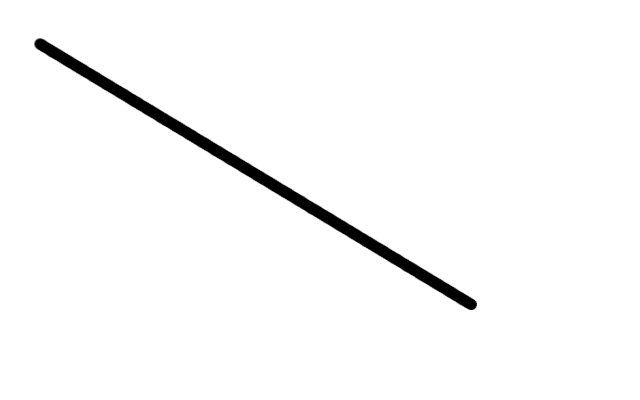
A straight line is a line that joins two points with the shortest distance .
For example the line that joins point A to point B is called line AB

STRAIGHT LINE.


PARALLEL LINES


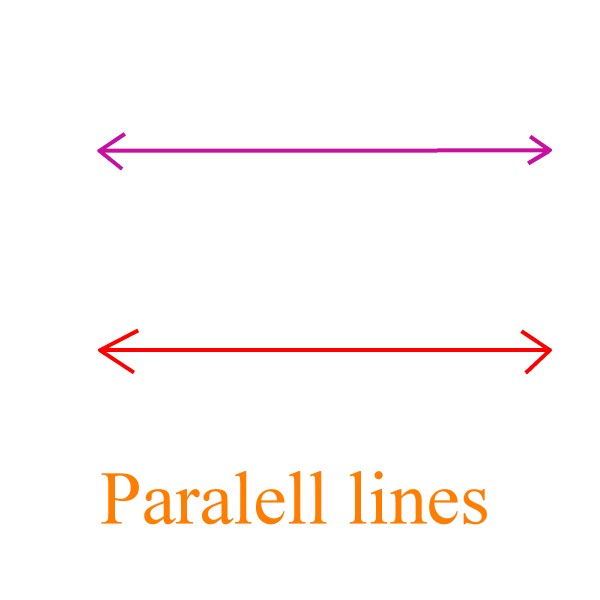
Parallel lines consist of two or more lines on a plane that are always the same distance apart and they never meet.


The symbol ‘ ¤¤ ’ is used to represent  ‘ is parallel to ’.
For example,


C
D
M
N
O
P


PERPENDICULAR LINES
Perpendicular lines are two lines that are at right angles to each other.
The symbol ‘ ^ ’ is used to represent ‘ is perpendicular to ’.
For example ,


ANGLES

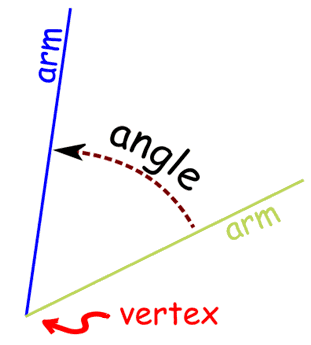
An angle is formed when two straight lines meet at a point.

THE STRUCTURE OF VERTEX.


The symbol ‘ Ð ’ is used to represent an angle.

The unit of measurement of an angle is degree ( ° ) or radian.

Angles are named according to the names of the lines that form the

angles . 


TYPES OF ANGLE

Angles are classified according  to their sizes.


Example : 


Name the following angles and state their characteristics

Size of angles
Name of angles
Characteristics
148°


56°


214°


90°


Solution :

Size of angles
Name of angles
Characteristics
148°
Obtuse angle
An obtuse angle is greater than 90° but less than 180°.
56°
Acute angle
Acute angle is  greater than 0° but less that 90°.
214°
Reflex angle
A reflex angle is greater than 180° but less than 360°.
90°
Right angle
A right angle = 90°.


PROPERTIES OF ANGLES


The sum of angles on straight  line is 180